Art
Subject Leader Introduction
My name is Miss Littleton and I have been leading Art at Stanton Primary School for nearly two years. I have always enjoyed being creative and exploring a wide range of artistic approaches, and I am passionate about developing this same curiosity in our pupils. While I would not describe myself as a specialist artist, I greatly value learning alongside the children and modelling a willingness to experiment, take risks and grow.
I have been continually inspired by the enthusiasm, creativity and ambition shown by our pupils. It has been a pleasure to see how their skills develop year on year, as well as deepening my own knowledge of artists, techniques and subject-specific vocabulary. I look forward to continuing to grow and develop the subject across the school.
My vision for Art at Stanton
My vision for Art at Stanton is to ensure all pupils develop confidence, creativity and pride in their work. Through a structured and progressive curriculum, children will build secure skills and knowledge while exploring a wide range of artists and styles. I aim for every child to feel successful in art, take creative risks and leave Stanton with a lasting appreciation for the subject.
Action Plan Priorities
Moving forward, I am keen to continue developing my own subject knowledge so I can best support staff and strengthen outcomes in art across the school. A key focus will be ensuring that children’s sketchbooks clearly show their learning journey, including techniques, skills, vocabulary and artists, so they can revisit and build on prior learning. I am also looking forward to working more closely with other schools in our trust, particularly Exning, to share ideas and develop the subject further, as well as keeping our governors informed about how art is growing and impacting pupils across the school.
Intent and curriculum overview
Statement of Intent
At Stanton Primary School, we believe that art plays a vital role in helping children understand themselves and their place in the world. Through art, pupils explore identity, develop a sense of belonging and learn to interpret the world around them with confidence and curiosity.
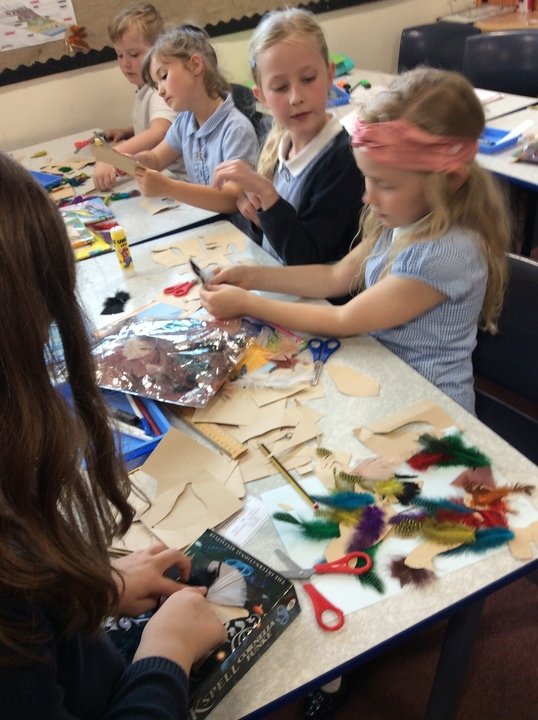
Our intent is to provide a rich and ambitious art curriculum that nurtures creativity, self-expression and critical thinking. We aim for all pupils to develop the skills and vocabulary needed to communicate their ideas effectively, while also fostering independence, resilience and reflective thinking. Art at Stanton is both a personal and shared experience, where pupils are encouraged to make choices, take risks and evaluate their work with increasing confidence.
We recognise the importance of broadening our pupils’ cultural awareness. Within our rural context, it is essential that children are exposed to a diverse range of artists, media and artistic traditions from across the world and throughout history. Through this, pupils develop an appreciation of difference, respect for individual perspectives and a deeper understanding of the richness and diversity of society.
Art also contributes significantly to pupils’ physical and emotional development. Through practical, hands-on experiences, children refine their fine motor skills and learn to manipulate a range of tools and materials. At the same time, art provides a valuable outlet for expression, supporting wellbeing and allowing pupils to communicate thoughts and feelings that may be difficult to express in other ways.
Our curriculum is carefully structured and progressive, following the CUSP Art curriculum. It places strong emphasis on explicit teaching, subject-specific vocabulary and the study of a diverse range of artists, designers and craftspeople. Pupils build knowledge and skills over time through a consistent lesson structure, enabling them to make meaningful connections and develop their own artistic voice.
We believe that children develop most successfully when they are taught the foundations of art with clarity and purpose, before being given the freedom to explore and create independently. As Pablo Picasso famously said, “Learn the rules like a pro, so you can break them like an artist.”
At Stanton, we want every child to see themselves as an artist. By providing high-quality opportunities to explore, create and respond, we empower pupils to develop confidence, empathy and a lifelong appreciation of art and creativity.
Curriculum overview
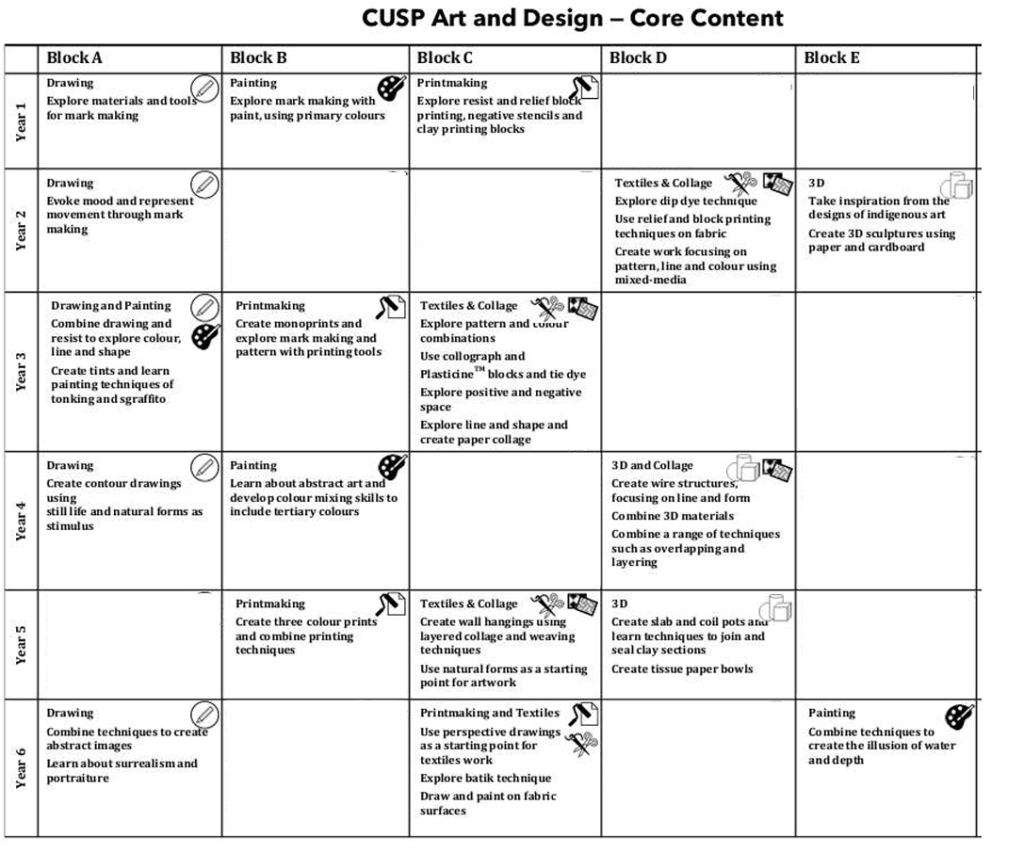
At Stanton, we follow a structured and progressive art curriculum based on the CUSP approach. Pupils complete three in-depth units each year, allowing time to practise, refine skills and reflect on their work, while learning about a range of artists. Over a two-year cycle, all key areas—drawing, painting, textiles, printmaking, 3D art and collage—are covered to ensure breadth and progression. Each unit is supported by a knowledge organiser outlining key artists, vocabulary and skills, helping pupils revisit and build on prior learning.
Supporting documents, including knowledge organisers, skills progression and National Curriculum links, can be found below.
National Curriculum – National Curriculum – Art and design key stages 1 to 2
Art in Early Years and Foundation Stage
In the Early Years Foundation Stage, art is introduced through rich, engaging experiences linked closely to our CUSP reading texts and continuous provision. Using CUSP knowledge notes, children begin to explore the foundational elements of art, including drawing and line, colour, painting, pattern, texture, shape and simple sculpting. Much of this learning is inspired by high-quality texts such as Luna Loves Art by Joseph Coelho, which provides a meaningful context for exploration and creativity. Through this unit, children are introduced to the work of artists such as Kazimir Malevich, Vincent Van Gogh and Henry Moore, and begin to recognise different genres including abstract, impressionist and post-impressionist art. These early experiences encourage curiosity, creativity and confidence, laying strong foundations for future artistic learning.
Teaching and Learning approaches
In Art at Stanton, our teaching and learning approaches are carefully structured through the CUSP curriculum to build knowledge, skills and creativity over time. Lessons are taught through a clear sequence of modelling, practising and applying, where pupils are introduced to new techniques and vocabulary before having opportunities to develop and refine their ideas independently. Vocabulary exercises and ‘thinking hard’ tasks are used to deepen understanding and promote mastery, while reflective questioning is woven throughout lessons to encourage pupils to evaluate their choices and develop critical thinking.
We provide appropriate challenge by encouraging pupils to experiment, make connections and refine their work with increasing independence, while support is thoughtfully planned to ensure all learners can succeed. Teachers use talk and questioning to extend thinking, check understanding and promote rich discussion about artists, techniques and outcomes.
Inclusive practice is central to our approach. Lessons are adapted where needed so that pupils with SEND can access and participate fully. This may include the use of visual prompts, breaking tasks into smaller steps through individual task boards, and adapting materials for sensory needs. Additional support such as pencil grips or sloped surfaces may also be provided to support motor development. Through these strategies, we aim to ensure that every pupil feels supported, confident and able to achieve in art.
Art in action
Art at Home
Art can be found everywhere, and we encourage pupils to explore whatever inspires them beyond the classroom. This might include visiting galleries, exploring local artists or simply creating their own artwork using everyday materials, such as creating collages with autumn leaves or experimenting with colour and texture at home. By giving children the freedom to be creative in their own way, they can develop confidence, curiosity and a lifelong enjoyment of art. Below are some useful websites and resources that families may wish to explore together at home.
Further information for parents and families
For further information, parents and families are encouraged to contact Miss Littleton with any questions or queries. This can be done easily through messaging on Class Dojo using the link below, and we are always happy to help and support wherever we can.