Music
Statement of Intent
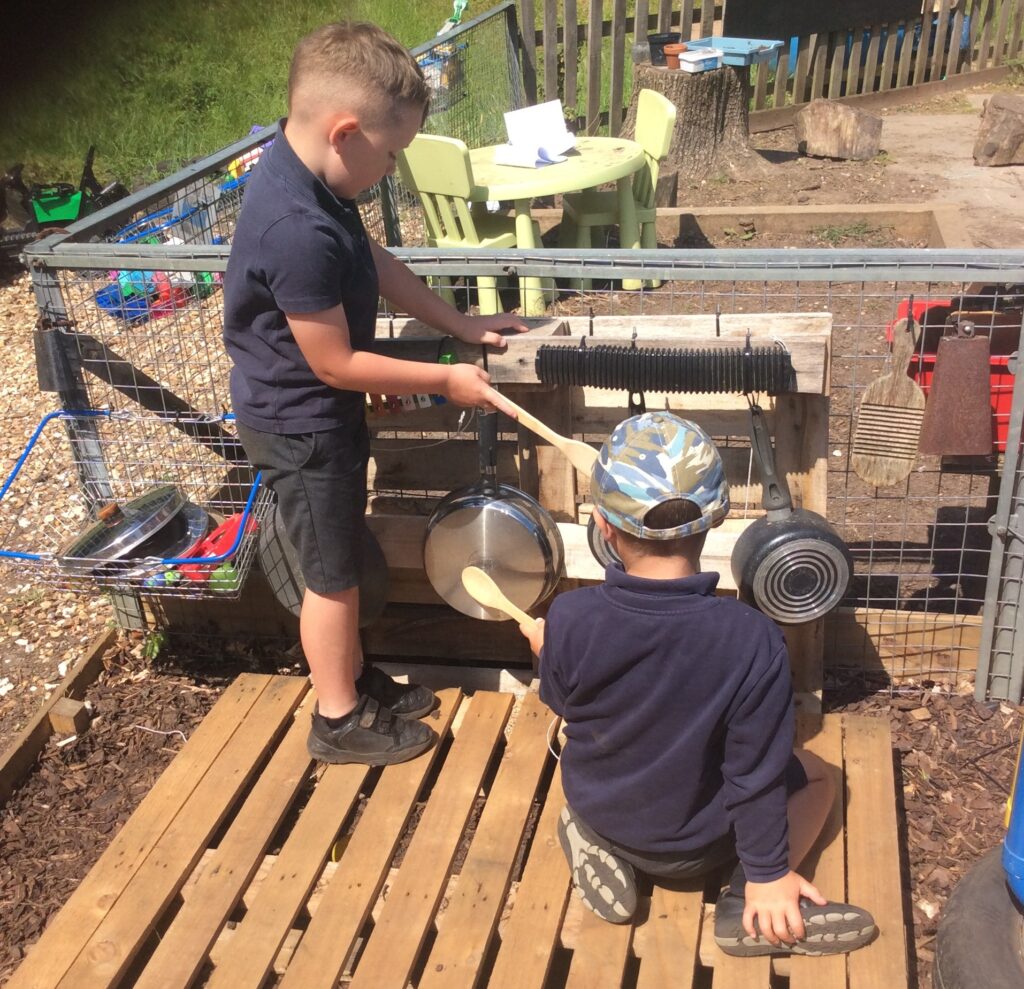
At Stanton Community Primary School our intention in Music is first and foremost to help children feel musical and develop a life-long love of music.
We focus on developing the skills, knowledge and understanding that children need in order to become confident performers, composers and listeners. Our curriculum introduces children to music from all around the world and across generations, teaching children to respect and appreciate the music of all traditions and communities. Our school population does not reflect a wide range of ethnic or cultural backgrounds so it is vital that our children understand and celebrate the huge culturally diverse influences in music, as well as recognise the successes of our local and national influences in music across the world.
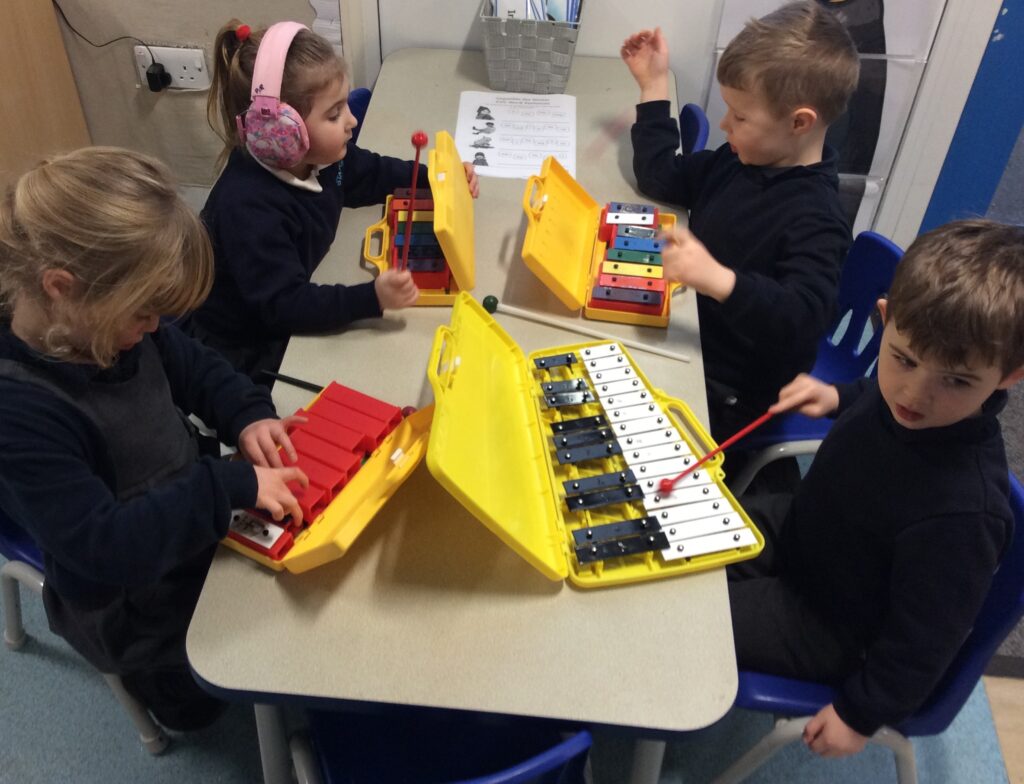
In our school, children will develop the musical skills of singing, playing tuned and untuned instruments, improvising and composing music and listening and responding to music. In Year 4, the children are given the opportunity to learn an instrument via the Suffolk School Music Service and then carry this on into Year 5 and 6 if they wish to.
Our aim is that children will develop an understanding of the history and cultural context of the music they listen to and play. Children also learn how music can be written down.
With nearly 40% of our children identified as in need of support with SEN or emotional wellbeing at our school, we cannot overlook how music can be an outlet for expression, a way to connect with others and a pathway to calm and relaxation. Susan Hallam, from the Institute of Education at the University of London, said “Music should be central to the school curriculum because it improves children’s health and wellbeing.”
Through music, our curriculum helps children learn transferable skills, such as working in a team, leadership, problems solving, decision making and presentation and performance skills. These skills are essential to support our children’s development as learners and have a wider application in their general lives outside of and beyond school.
Music in Early Years and Foundation Stage
The EYFS framework is structured very differently to the national curriculum, as it is organised across seven areas of learning rather than subject areas. In EYFS Music is predominantly woven through 2 areas of the curriculum: Communication and Language and Expressive Arts and Design. Below are the most relevant statements from Development Matters (2020) in the EYFS statutory framework. Throughout children’s learning in our Nursery and Reception Class children are encouraged to learn all of the following to form the foundation for their later learning in the national curriculum .
3-4 year olds:
- Sing a large repertoire of songs.
- Listen with increased attention to sounds.
- Respond to what they have heard, expressing their thoughts and feelings.
- Remember and sing entire songs.
- Sing the pitch of a tone sung by another person (‘pitch match’).
- Sing the melodic shape (moving melody, such as up and down, down and up) of familiar songs.
- Create their own songs, or improvise a song around one that they know.
- Experiment by playing instruments with increasing control to express their feelings and ideas.
Reception:
- Listen carefully to rhymes and songs, paying attention to how they sound.
- Learn rhymes, poems and songs.
- Create collaboratively, sharing ideas, resources and skills.
- Listen attentively, move to and talk about music, expressing their feelings and responses.
- Sing in a group or on their own, increasingly matching the pitch and following the melody.
- Explore and engage in music making and dance, performing solo or in groups.
By the end of EYFS, the Early Learning Goal is that children should be able to :
- Perform songs, rhymes, poems and stories with others, and (when appropriate) try to move in time with music.
- Sing a range of well-known nursery rhymes and songs.
An overview of our Music Curriculum
We have chosen to follow the Kapow Music planning for the majority of year groups, to support children in building confidence and developing a genuine interest in music. The scheme exposes pupils to a broad and diverse range of music from around the world and throughout history, which closely aligns with our curriculum intent.
Kapow provides clear National Curriculum mapping, showing how individual units address each of the National Curriculum attainment targets and the strands within them. There is a well‑sequenced progression of knowledge and skills within each year group, which is carefully built upon year on year. This ensures that pupils develop securely and are well prepared to meet the expected attainment targets by the end of each key stage.
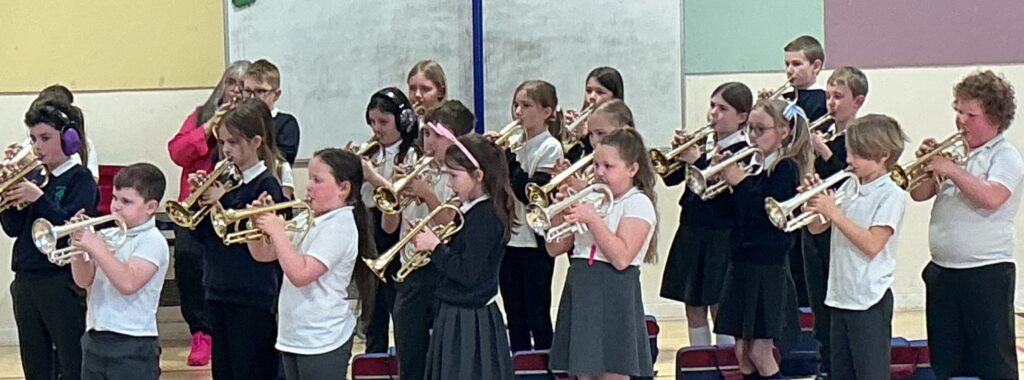
In Year 4 Children are taught by a specialist Music teacher from the Suffolk County Music Service and also learn to play an instrument. They perform for their families and peers at the end of each term.
The SCMS curriculum builds on children’s prior learning. It continues to address the required skills and National Curriculum attainment targets for this year group, including the relevant strands within each area. The curriculum also provides a strong foundation for the further development of pupils’ skills and knowledge as they progress into Years 5 and 6
Children have regular, discrete music lessons and frequent opportunities to perform, both within the classroom and during musical assemblies. Weekly singing assemblies take place, during which children learn a wide variety of songs across different genres, including singing in parts and using call‑and‑response techniques.
Music is also used meaningfully across the wider curriculum. In classrooms, it supports learning in subjects such as Mathematics, PE and Science, provides a stimulus or atmosphere for expressive arts lessons, helps to introduce new topics, and is often used for relaxation and enjoyment. Children also enjoy listening to, joining in with and dancing to music at lunch time on the playing field!
| Year 1 | Year 2 | Year 3 | Year 4 | Year 5 | Year 6 | |
| Autumn | Superheroes(Pitch and Tempo) | Musical Me | Indian Music(Traditional Instruments and improvisation) | Exploring SoundsFirst notes on my instrument and singing and playing together | South and West Africa | Film Music |
| Spring | The Snail and the Mouse(Classical Music, dynamics and tempo) | African Call and Response Song | Chinese New Year(Pentatonic melodies and composition) | Improving my playing. Reading music and learning new notes on my instrument. Singing and playing as a team | Blues | Music of World War 2 |
| Summer | Under the Sea(Musical Vocabulary) | Orchestral Instruments | Ballads | Playing with confidence and good technique from memory and notation. I can sing and play as part of an ensemble | Looping and remixing | Pop Art(Theme and Variations) |
Whole Class Instrument Tuition
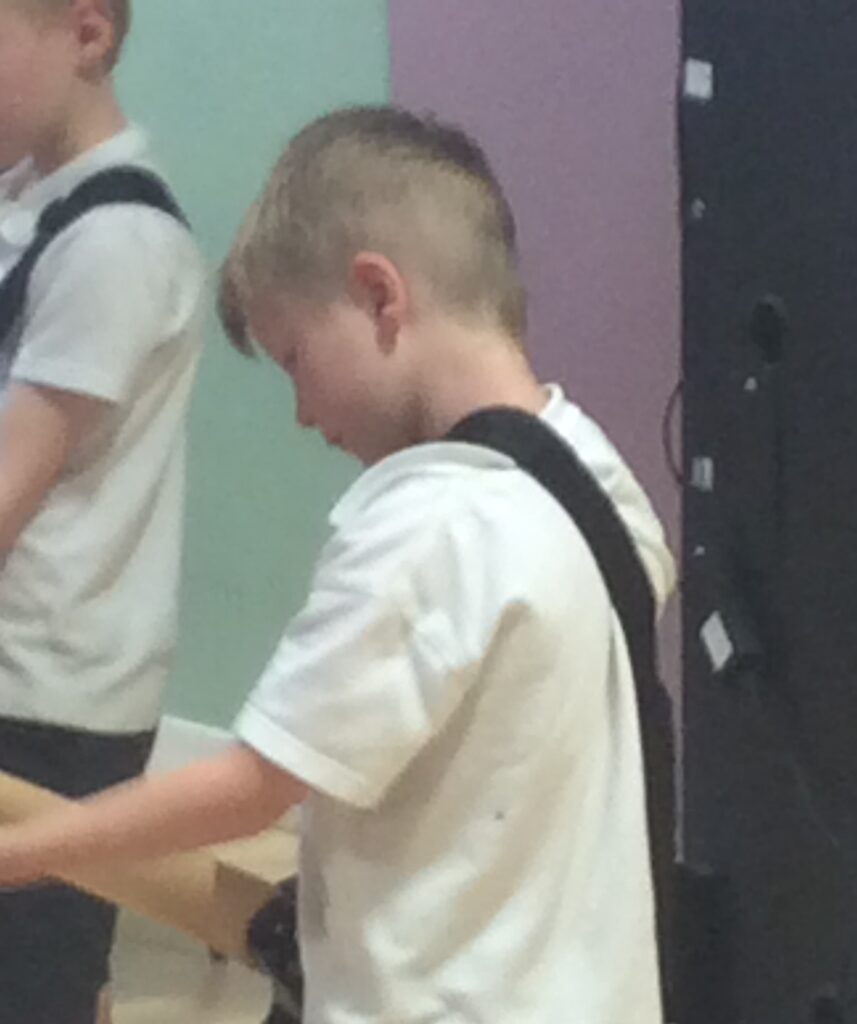
All children in Year 4 are provided with an instrument and receive whole‑class tuition from a qualified music teacher from the Suffolk County Music Service. Throughout the year, children have regular opportunities to perform both in school and in the wider community to a range of audiences. Pupils are also given the opportunity to continue their instrumental tuition beyond Year 4. Alongside instrumental learning, lessons incorporate the wider music curriculum, including singing, composition and the study of classical music.
Extra-Curricular Music
#Children at our school are given the opportunity to participate in Rocksteady band lessons. Through these sessions, pupils learn to play as part of their own band, perform songs they enjoy, and develop confidence, teamwork, resilience and listening skills. Rocksteady lessons are led by highly trained, active musicians who inspire first and teach second. We currently have five Rocksteady bands in school, made up of children from Reception through to Year 6.
https://www.rocksteadymusicschool.com/
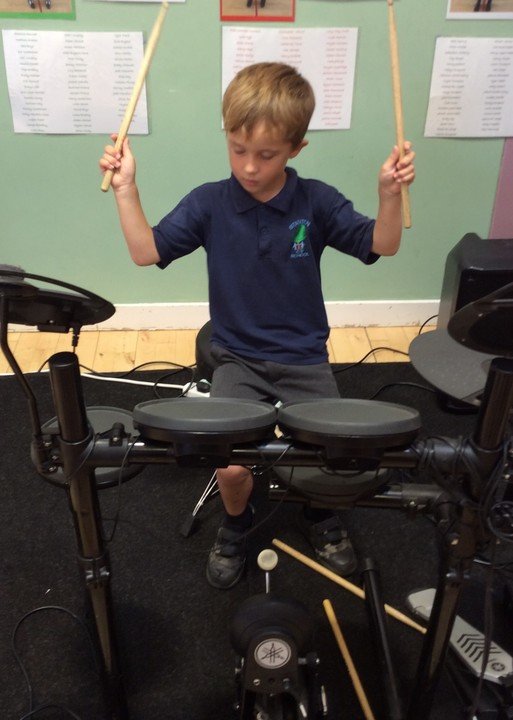
In addition to this, we regularly offer a range of after‑school music clubs, including singing, ukulele, recorder and opera club.
We also offer piano and guitar lessons delivered by a peripatetic music company, giving pupils further opportunities to develop their musical skills.
https://www.pianofunclub.co.uk/
Musical Experiences
Children are provided with regular opportunities to experience music as part of an audience. We frequently take part in live broadcasts from organisations such as BBC Ten Pieces, The Royal Ballet and Opera, Rocksteady Fridays and Snape Maltings, which are streamed directly into our classrooms and school assembly hall. We recently participated in a regional workshop production of Mozart’s The Magic Flute.
We also invite local musicians, musical family members and community groups to perform for our pupils. Recent visitors have included the Bury St Edmunds Friendly Orchestra, a talented jazz pianist, Stanton Folk, local up and coming bands and further education music students from within the trust. We have also welcomed performers from West End Live, who led inspiring music and dance workshops with our children. For World Music Day this year we have a full day of African Drumming workshops.
At Christmas, the whole school enjoys a visit to the pantomime at the Theatre Royal in Bury St Edmunds. Throughout the rest of the year, children also have opportunities to watch amateur and professional musical productions at nearby secondary schools and within the wider community.
Performing Music
The National Curriculum for Key Stages 1 and 2 states that music lessons “should engage and inspire pupils to develop a love of music and their talent as musicians, and so increase their self‑confidence, creativity and sense of achievement.” We therefore provide all children with frequent and varied opportunities to perform music to their peers, teachers, families and the wider community.
Performance opportunities take place within music lessons and assemblies, as well as during annual Key Stage productions and Harvest, Christmas and Easter services held in our local church. Pupils have also performed at community events, including Remembrance services at the village war memorial, workshops at local schools and performances at the local college. We hope to extend these opportunities further by performing for residents at a local care home in the near future.
In addition, children are encouraged to take part in our annual “Stanton’s Got Talent” event, which celebrates a wide range of musical styles and genres and provides pupils with a supportive platform to showcase their talents and achievements.
Useful documents
For more information on the school’s teaching and learning in Music please do not hesitate to get in contact with Mrs Edney, the Music lead, or click on the links below.